Why this question is harder than people think.
Sometimes the answer is obvious.
Your website is outdated, difficult to update, slow, confusing, or no longer reflects your business at all. In those cases, a redesign makes sense.
But honestly?
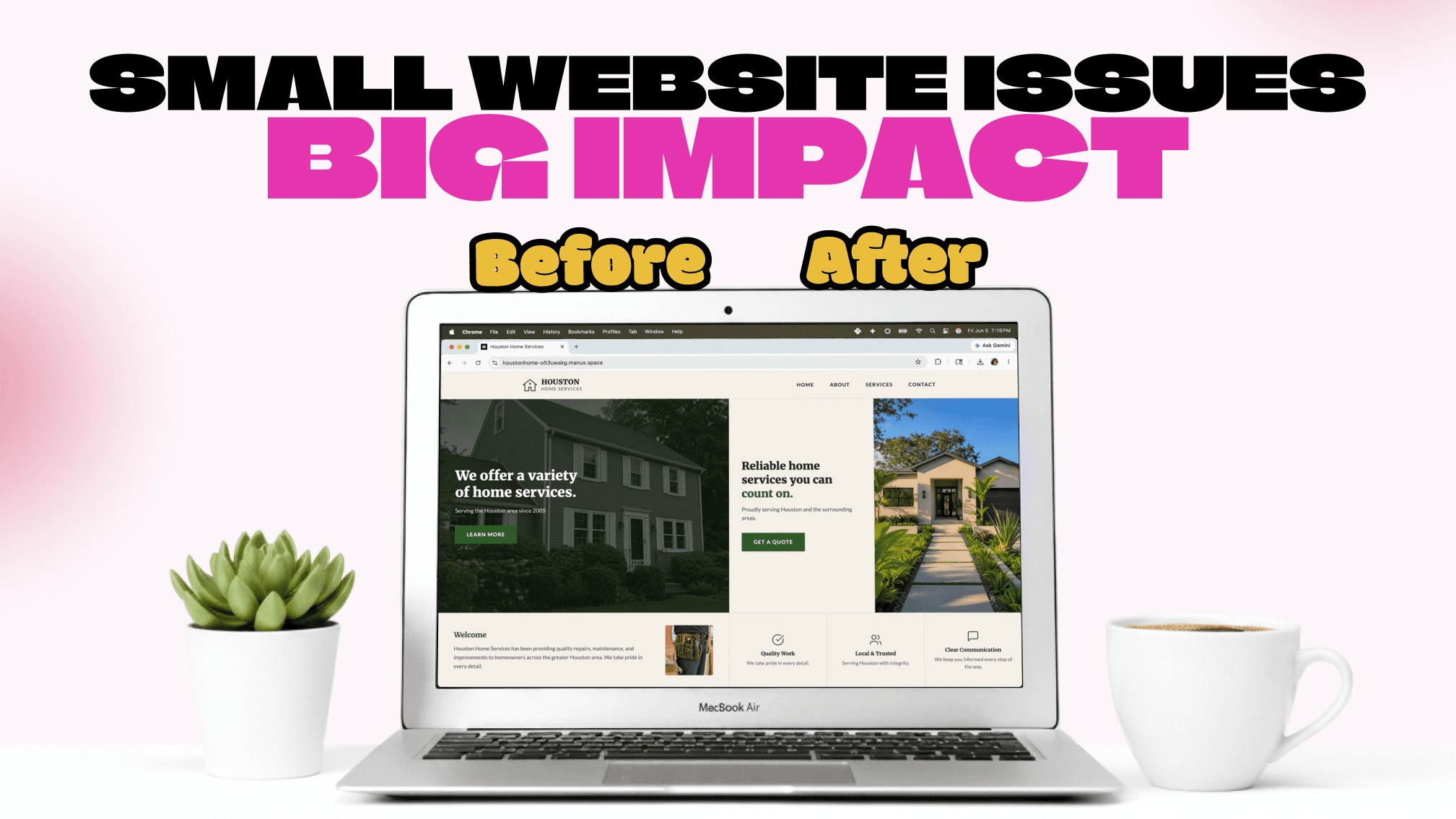
A lot of business owners assume they need a brand-new website when what they actually need are a few thoughtful fixes.
I see this all the time.
Someone comes to me frustrated with their website — convinced it’s “bad” or that they need to start over — when in reality, the bones are still solid. The problem is usually something much more fixable: confusing messaging, poor mobile experience, slow load times, outdated content, or small usability issues that have quietly piled up over time.
Before you invest in a redesign, it’s worth asking:
Does your website actually need rebuilding — or just better strategy?
Signs You Might Not Need a New Website
Even if your website feels frustrating, that doesn’t automatically mean you need to scrap everything and start over.
Here are a few signs your current website may still be worth improving:
Your website still basically works
If visitors can find information, navigate easily, and complete important actions (like submitting a form or booking a call), the foundation may still be strong.
Your branding still feels aligned
If your business has evolved but your overall brand still feels accurate, you may only need updates to messaging, content, or visuals rather than a full redesign.
You’re getting some traffic — but not enough results
Sometimes the issue isn’t traffic.
Sometimes it’s clarity.
Visitors land on your website but don’t know exactly what you do, who you help, or what action to take next.
That’s often a strategy problem — not a rebuild problem.
Your website just feels… “off”
You know the feeling.
You don’t necessarily hate your website, but something feels outdated, clunky, or disconnected from where your business is now.
In many cases, targeted improvements can make a website feel dramatically stronger without rebuilding from scratch.
If this sounds familiar, ongoing website maintenance and support or strategic improvements may make more sense than a full redesign.
Common Website Problems That Feel Bigger Than They Are
Sometimes website problems feel huge when they’re actually very fixable.
Here are some of the most common issues I see:
Slow website speed
A slow website can absolutely hurt user experience and conversions — but often, the solution is optimization rather than rebuilding.
Bloated plugins, oversized images, outdated themes, or hosting issues are frequently the culprit.
Poor mobile experience
Spacing problems, tiny text, awkward layouts, or hard-to-click buttons can make a website feel broken on phones.
But these issues are often surprisingly fixable.
Confusing homepage messaging
This one is huge.
If someone lands on your website and can’t immediately understand:
- what you do
- who you help
- why it matters
- what to do next
…your website may be losing opportunities.
But again — that doesn’t always require a new website.
Sometimes it requires clearer messaging and better strategy.
Weak calls-to-action
You’d be surprised how many websites simply don’t make the next step obvious.
If visitors don’t know how to contact you, book, buy, or inquire, your website may feel ineffective even if the design itself is perfectly fine.
Outdated content
Old team photos, outdated services, or messaging that no longer reflects your business can make a website feel stale quickly.
But content refreshes can go a long way.
Broken forms or small functionality issues
Sometimes a single broken form is quietly costing leads.
(Yes, this happens more often than you’d think.)
These are the kinds of issues that make a website feel much worse than it actually is.
Signs It Actually Might Be Time for a Redesign
Okay — sometimes a redesign really is the right answer.
Here are a few signs your website may have outgrown quick fixes:
Your platform feels limiting
If your website is difficult to update, hard to customize, or constantly fighting you, it may be time for a better long-term solution.
Your website no longer reflects your business
Maybe your services changed.
Maybe your audience changed.
Maybe your business has simply grown.
If your website feels disconnected from who you are today, a redesign might be worth considering.
User experience is genuinely poor
If visitors struggle to navigate your site, important information is buried, or the experience feels frustrating, it may be time to rethink the structure altogether.
Your website has become patchwork
You know the type:
A plugin here. A workaround there. Five different design styles. Old content mixed with new content.
Eventually, websites become harder to maintain than rebuild.
Your website simply isn’t converting
If people are visiting but not taking action — despite strong traffic — there may be a deeper structural issue worth addressing.
Sometimes optimization solves this.
Sometimes a redesign does.
The Question We Ask Clients First
When someone tells me they think they need a new website, I usually ask one question first:
“What’s actually frustrating you about your website?”
Because diagnosing the real problem matters.
Sometimes the answer is:
“I hate how outdated it feels.”
Sometimes it’s:
“No one fills out my form.”
Sometimes it’s:
“It doesn’t feel like us anymore.”
Those are very different problems — and they don’t all require the same solution.
That’s why I almost never jump straight to:
“Yep, you need a rebuild.”
Sometimes the smartest investment is strategic fixes.
Sometimes it’s optimization.
And sometimes a redesign genuinely makes sense.
Not Sure What Your Website Actually Needs?
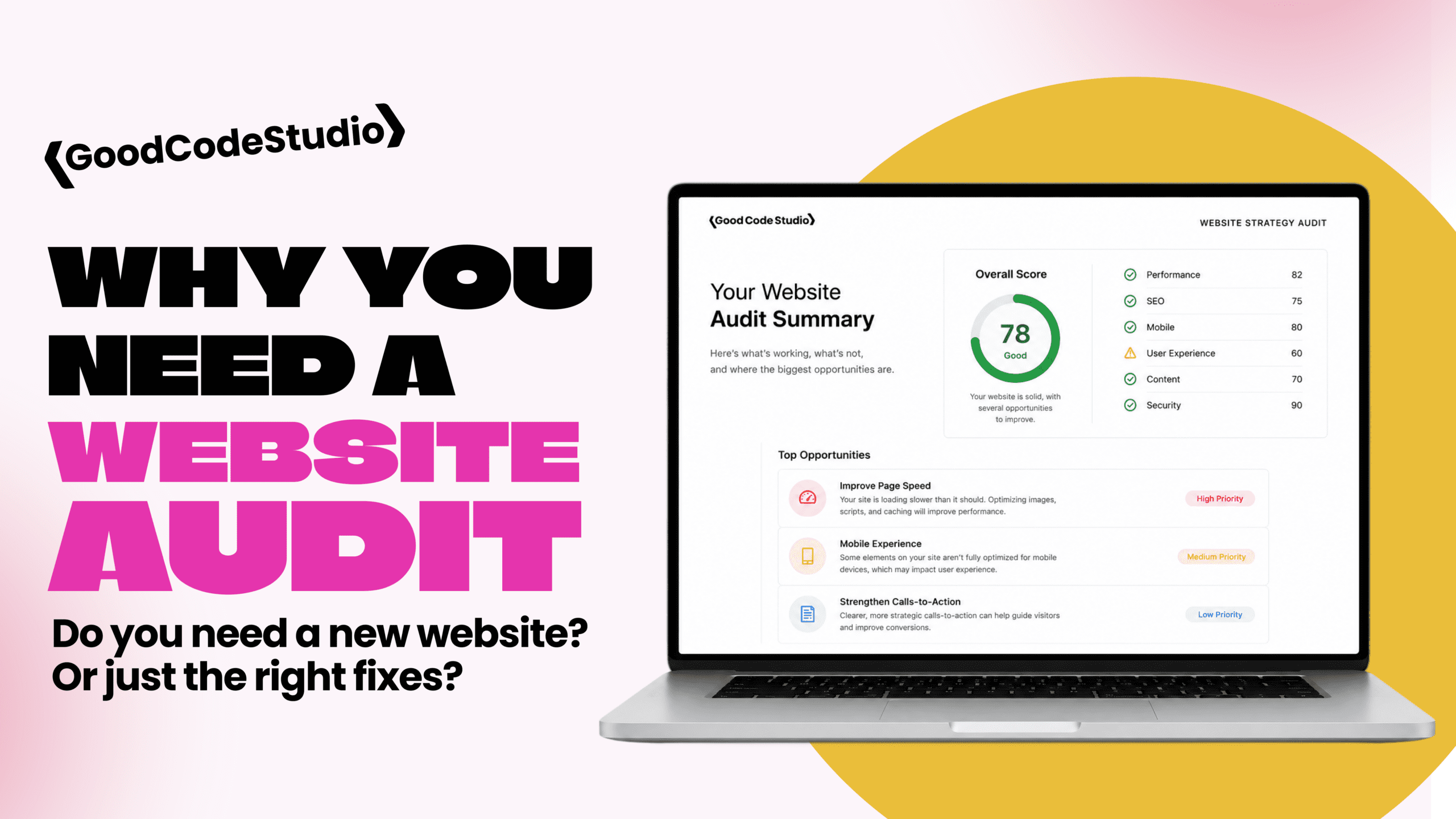
If your website feels off — but you’re not sure whether you need a redesign or just the right improvements — start with a Website Strategy Audit.
We’ll review what’s working, what’s not, and what’s worth prioritizing so you can make a smart decision before investing in bigger changes.
Explore the Website Health & Strategy Audit →
Or, if you already know your website needs a bigger transformation, learn more about our custom WordPress development services.