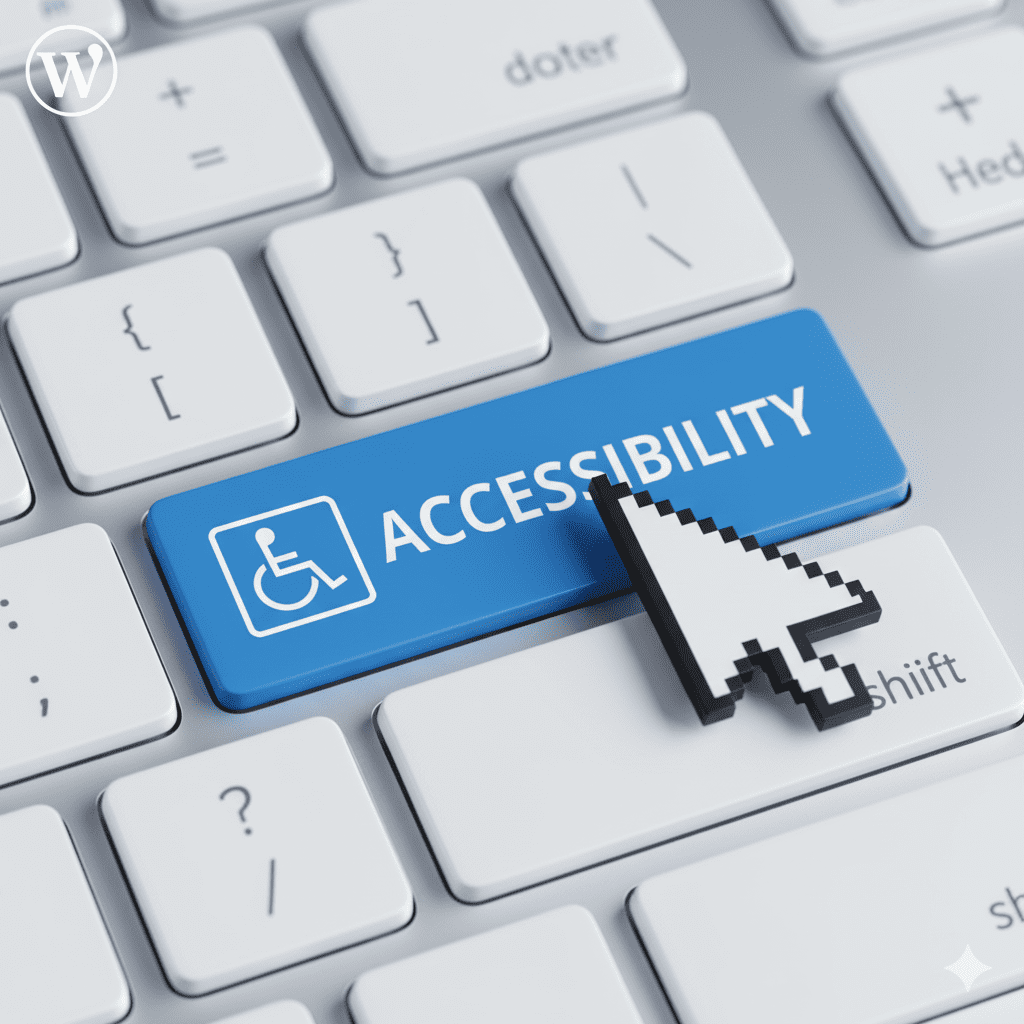
When most people think about web design, they focus on looks, speed, or functionality. But there’s another piece that’s just as important: accessibility. An accessible website ensures that everyone — including people with disabilities — can use and benefit from your site. It’s not just a legal requirement in many cases; it’s good business, good design, and the right thing to do.
What is Website Accessibility?
Website accessibility means designing and developing your site so that people with disabilities can perceive, understand, navigate, and interact with it. This includes individuals with:
- Visual impairments (blindness, low vision, color blindness)
- Hearing impairments
- Mobility challenges (using keyboard navigation instead of a mouse)
- Cognitive differences
Accessibility is guided by international standards such as the Web Content Accessibility Guidelines (WCAG) and, in the U.S., compliance with the Americans with Disabilities Act (ADA).
Why Accessibility Matters
1. It Expands Your Audience
One in four adults in the U.S. lives with a disability. If your website isn’t accessible, you’re automatically excluding a huge portion of potential customers. Accessibility ensures everyone has equal access to your business.
2. It Improves SEO
Many accessibility practices overlap with SEO best practices. For example:
- Adding alt text to images helps both screen readers and search engines.
- Clear heading structures improve usability and indexing.
- Fast, mobile-friendly sites support both accessibility and SEO.
3. It Reduces Legal Risk
Businesses across the U.S. have faced lawsuits for failing to make their sites accessible. Proactive compliance helps you avoid fines, lawsuits, and negative publicity.
4. It Builds Trust
An accessible site signals that you care about all your customers. That builds trust and strengthens your brand reputation.
Accessibility in Action: Practical Steps
Here are some of the most important features of an accessible site:
- Alt text for images so screen readers can describe visuals.
- Keyboard navigation for users who can’t use a mouse.
- High color contrast for better readability.
- Captions and transcripts for videos.
- Responsive design so content is accessible on all devices.
Even small improvements can make a big difference.
Accessibility as Strategy, Not an Add-On
Accessibility shouldn’t be treated as an afterthought. At Good Code Studio, we design accessibility into the foundation of every site:
- Clean code that supports assistive technologies.
- Thoughtful typography and contrast choices.
- Testing across devices and tools.
We believe accessibility is part of great design, not an extra feature. It makes your site stronger for everyone.
Final Thoughts
Accessible websites aren’t just a legal requirement — they’re a reflection of your values as a business. By making your site usable for everyone, you expand your reach, improve performance, and show your customers that you care.
👉 Want to make sure your site is accessible? Let’s build it right.